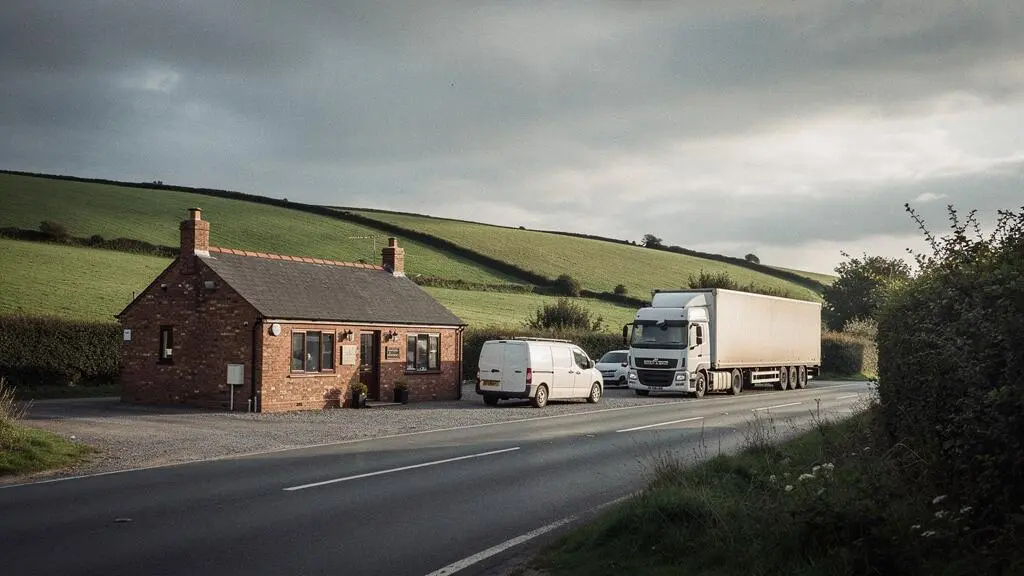
The secret to finding authentic British roadside food lies not in tourist guides, but in reading the economic and cultural signals of the working landscape.
- A car park full of lorries is a stronger indicator of quality and value than any online review.
- Genuine regional menus use specific, local names for dishes, not generic descriptions like “meat pie.”
Recommendation: To find the best meals, start thinking like a local worker, not a tourist. Drive away from major attractions and look for the places that serve the people who live and work in the area.
The quest for authentic food on a UK road trip often ends in disappointment. You set out with visions of a hearty, home-cooked meal in a cosy, undiscovered diner, only to find yourself in a soulless chain restaurant or a tourist-trap pub serving overpriced, microwaved fare. The common advice—”go off the beaten path” or “check online reviews”—is frustratingly vague and often misleading. Tourist hotspots are masters of digital PR, and the truly authentic gems are frequently hidden in plain sight, operating on a different set of rules.
This guide offers a different approach. Forget the usual platitudes. The real key to unlocking Britain’s incredible regional cuisine is to become a roadside detective. It’s about learning to decode the subtle, real-world signals that broadcast authenticity. It’s understanding the economic logic that separates a value-driven transport café from an overpriced tourist trap, and the cultural cues that distinguish a living culinary tradition from a curated performance for visitors.
We will explore the powerful indicator of a lorry-filled car park, dissect menus to spot genuine local dishes, and compare the different types of authenticity offered by traditional pubs and modern gastropubs. By learning to read these signs, you can bypass the generic and connect with the real taste of a region, turning your journey into a genuine culinary adventure.
This article provides a complete framework for finding these hidden culinary gems. Below is a summary of the key strategies we’ll cover to help you navigate Britain’s roadside dining scene like an expert.
Summary: The Roadside Detective’s Guide to Authentic UK Food
- Why Cafés With 8+ HGVs Parked Outside Serve Better Food Than Empty Roadside Restaurants
- How to Spot Menus Featuring Genuine Regional Dishes Versus Generic National Chains
- Traditional Roadside Café or Country Gastropub: Which Serves More Authentic Regional Food
- The Location Mistake That Guarantees Tourist-Priced Food Near Major Attractions
- What Time Should You Eat at Roadside Diners to Get Freshly Cooked Local Meals
- Why Hidden Natural Wonders Deliver More Memorable Experiences Than Famous Landmarks
- Why Ticketed Folk Performances Rarely Reflect Actual Living Cultural Practices
- How to Participate in Regional Traditions Without Offending Locals or Appearing Exploitative
Why Cafés With 8+ HGVs Parked Outside Serve Better Food Than Empty Roadside Restaurants
The single most reliable indicator of a great British roadside meal isn’t a Michelin star or a glowing online review; it’s a car park filled with heavy goods vehicles (HGVs). This isn’t just folklore; it’s a powerful economic signal. Professional drivers spend their working lives on the road and operate on tight schedules and even tighter budgets. They are discerning consumers who need large, high-quality, freshly cooked meals at a fair price. They cannot afford to waste time or money on subpar food.
The economics are simple. According to official government figures, the median pay for an HGV driver is around £15.00 per hour, roughly 14% below the national median. This financial reality means they are experts at finding maximum value. A café that consistently attracts drivers has proven its ability to deliver on three core promises: generous portions, quality ingredients, and fair pricing. An empty café, conversely, has failed this crucial market test. While a tourist might visit once, a lorry driver is a repeat customer, and their loyalty is earned through consistent quality, not clever marketing.
How to Spot Menus Featuring Genuine Regional Dishes Versus Generic National Chains
Once you’ve found a promising establishment, the menu itself is your next set of clues. The key is to look for specific culinary vocabulary that roots the establishment in its local geography, rather than the generic, nationally-recognized terms used by chain suppliers. A menu offering a “Steak and Ale Pie” is ambiguous; it could come from a factory anywhere in the country. But a menu that lists a “Fidget Pie” tells a much more specific story.
A generic menu is a red flag, signalling a kitchen that relies on frozen, pre-prepared products delivered by a national distributor. These menus are designed to be inoffensive and universally recognizable, featuring staples like lasagne, scampi, and “chef’s special” curry. In contrast, an authentic menu will proudly feature dishes that might be unfamiliar to outsiders. Look for names that reference local towns, historical figures, or use regional dialect. These are dishes that have survived because they are part of the area’s living culture, passed down through generations.
Case Study: Shropshire’s Fidget Pie as a Hyper-Local Authenticity Marker
Fidget pie, a farmhouse pie of gammon, cooking apple, onion and potato, is strongly associated with Shropshire, where it is considered the best-known regional version among several Midlands variants. Its continued presence on a menu, rather than a generic ‘meat pie’, signals an establishment rooted in local culinary tradition rather than a supplier-driven, generic offering. Finding it on a menu is a near-guarantee that you are in an establishment that values its regional identity.
Don’t be afraid to ask staff about these dishes. A passionate response about the dish’s origin or ingredients is a fantastic sign of a kitchen that takes pride in its local heritage.
Traditional Roadside Café or Country Gastropub: Which Serves More Authentic Regional Food
The terms “pub” and “café” cover a vast spectrum of dining experiences in the UK, from the humble “greasy spoon” to the Michelin-starred gastropub. When seeking authenticity, it’s vital to understand the difference between lived authenticity and curated authenticity. A traditional, family-run roadside pub or café often embodies lived authenticity; its recipes and atmosphere have evolved over decades, shaped by the community it serves. A gastropub, while often excellent, typically offers curated authenticity—a chef’s modern, sophisticated reinterpretation of local ingredients and dishes.
Neither is inherently better, but they serve different missions. The traditional spot is about hearty, unpretentious fuel and a connection to the social fabric of a place. These are often the very community hubs under threat, with trade body figures revealing a staggering 289 pub closures across England and Wales in a single year, representing a significant loss of cultural heritage. The gastropub, on the other hand, is a destination for a more refined culinary experience, where the focus is on craftsmanship and elevated flavours. Deciding which to visit depends entirely on what kind of authentic experience you’re looking for.
This table breaks down the key differences to help you choose the right venue for your mission.
| Criteria | Traditional Roadside Café / Pub | Country Gastropub |
|---|---|---|
| Type of Authenticity | Lived authenticity (decades-old recipes) | Curated authenticity (chef’s modern reinterpretation) |
| Menu Language | Simple, direct naming (e.g. ‘Shepherd’s Pie’) | Descriptive, elevated language (e.g. ‘foraged wild garlic jus’) |
| Price Point | Reasonable, value-driven | Premium, reflecting culinary craftsmanship |
| Typical Pace | Quick, no-frills service | Extended, multi-course dining experience |
| Best Mission | Fast, hearty fuel or community hub visit | Elevated culinary experience with local ingredients |
Understanding this distinction is the first step. The choice between them depends on whether you seek comfort food rooted in history or an innovative meal inspired by it.
The Location Mistake That Guarantees Tourist-Priced Food Near Major Attractions
The most common mistake travellers make is eating too close to their destination. Every major tourist attraction, from ancient castles to stunning natural landmarks, exists within a “tourist gravity well.” This is a radius of a few miles where businesses are almost exclusively geared towards capturing one-time visitor spending. Within this zone, rents are higher, and the business model is based on volume, not repeat custom. Authenticity and value are the first casualties. With tourism generating about £76 billion in domestic visitor spending in England, the financial incentive to create these traps is immense.
The solution is simple but requires discipline: the 10-mile rule. After visiting a major attraction, get back in your car and drive at least 10 miles in any direction—preferably away from the next major town or motorway. This act physically removes you from the tourist gravity well and places you back into the “working landscape,” where establishments must cater to locals to survive. This is where you’ll find the pubs with loyal regulars and the cafés that serve the surrounding farms and businesses.
This isn’t about avoiding popular areas entirely, but about being strategic. Visit the landmark, absorb the history, and then make a conscious decision to seek your meal outside the bubble of inflated prices and generic menus.
Your Action Plan: Escaping the Tourist Food Zone
- Plan Your Escape Route: Before visiting an attraction, use a map to identify small villages or A-roads 10-15 miles away. Make this your designated lunch zone.
- Drive Against the Grain: After your visit, consciously drive away from the signposted “main route” to the next city or motorway. Take the smaller, less obvious road.
- Identify Community Hubs: Look for signs of a real village—a post office, a school, a parish notice board. A pub or café in a place like this serves a community, not just a stream of tourists.
- Trust Physical Clues over Digital: Favour places with a hand-painted sign and a well-tended garden over those with slick, professional branding and prominent “TripAdvisor Recommended” stickers.
- Check the Opening Hours: A pub that closes in the mid-afternoon is likely geared towards the lunch and dinner trade for locals, not an all-day tourist flow.
What Time Should You Eat at Roadside Diners to Get Freshly Cooked Local Meals
Timing your meal is almost as important as choosing the location. The rhythm of a traditional British café or pub kitchen is dictated by the needs of its regular, local customers, not the erratic schedule of a tourist. Arriving at the wrong time can mean the difference between a freshly prepared feast and a tired, lukewarm dish that has been sitting under a heat lamp for hours.
For the best breakfast experience, aim to arrive between 7:00 AM and 8:30 AM. This is the peak time for workers and lorry drivers starting their day. The grill will be hot, the bacon crisp, and the eggs cooked to order. Arriving after 10:00 AM risks getting the tail-end of the service, when ingredients may be past their best. For lunch, the prime window is between 12:00 PM and 1:30 PM. This is the classic British lunch hour. A pub serving a “pie of the day” or a “roast of the day” will have it fresh from the oven at this time. Eating later, around 2:30 PM or 3:00 PM, often means you’re getting the last, tired portions or the kitchen has switched to a limited, less fresh menu.
Essentially, you want to sync your appetite with the local workday. By eating when the locals eat, you are aligning yourself with the kitchen’s moment of maximum freshness and quality. This simple act of temporal awareness ensures you experience the food as it’s meant to be served—hot, fresh, and full of flavour.
Why Hidden Natural Wonders Deliver More Memorable Experiences Than Famous Landmarks
In travel, the most profound experiences often come not from ticking off a famous landmark, but from an unexpected, personal discovery. The same is true for food. A truly great regional dish, found in an unassuming roadside pub, can be more memorable than a meal in a world-famous restaurant. This is because it represents a “hidden wonder” of a different kind—a direct, authentic connection to the culture, history, and agriculture of a place.
This search for authenticity is a growing motivation for travellers. As VisitScotland notes in its research on food and drink tourism, “A nation’s food and drink offering can add character and authenticity to the visitor’s destination experience.” The experience of tasting a local cheese or drinking a beer brewed a mile down the road provides a sense of place that a photograph of a castle cannot. It’s a multisensory engagement with the region’s identity. This is supported by visitor data, which indicates that over 26% of long-haul visitors to Scotland actively sought out experiences like visiting a distillery or brewery, choosing participation over passive sightseeing.
A nation’s food and drink offering can add character and authenticity to the visitor’s destination experience.
– VisitScotland, Food and Drink Tourism Insights
Treating your search for food as a search for a hidden cultural landmark transforms the entire journey. Every meal becomes an opportunity for discovery, and every rural pub a potential museum of local flavour.
Why Ticketed Folk Performances Rarely Reflect Actual Living Cultural Practices
A “ticketed folk performance”—be it a choreographed Morris dance for tourists or a “traditional banquet” in a castle—offers a snapshot of culture, but it’s often a fossilised, curated version. The true, living culture of a region happens in the spaces where people connect organically: the post office queue, the school gate, and, most importantly, the local pub. These are the stages for real life, where community is built and traditions are actively practiced, not just performed.
When you choose to eat at a small, independent pub or café, you are not just buying a meal; you are buying a temporary ticket into this living culture. The conversations you overhear, the interactions between the landlord and the regulars, the notices on the community board—these are the real folk performance. However, this living stage is fragile. The relentless closure of rural pubs and shops erodes the very infrastructure of community. As Victoria Vyvyan, President of the Country Land and Business Association (CLA), warns about the loss of these vital services:
Give it time, and communities will go too.
– Victoria Vyvyan, Country Land and Business Association (CLA)
Seeking out these places is a way to experience culture in its authentic state. It’s choosing the dynamic, unscripted reality of a community hub over a polished but lifeless re-enactment.
Key Takeaways
- The most reliable sign of a good roadside diner is a car park full of lorries; it’s an economic guarantee of quality, portion size, and value.
- Authentic menus use specific, hyper-local dish names (e.g., “Fidget Pie”) instead of generic terms used by national chain suppliers.
- To avoid tourist traps, drive at least 10 miles away from any major attraction before you stop to eat.
How to Participate in Regional Traditions Without Offending Locals or Appearing Exploitative
The final piece of the puzzle is not just finding the right place, but engaging with it respectfully. The goal is to be a welcome visitor, not an intrusive observer. The easiest way to participate in a local tradition is simply by being a good customer. This means showing genuine interest, patience, and appreciation. It’s a transaction that goes beyond money for food; it’s an exchange of respect.
A few simple behaviours can make all the difference. When you enter a quiet country pub, a friendly “hello” to the person behind the bar acknowledges you are entering their space. If the menu has a local speciality you’re curious about, ask about it with genuine interest, not skepticism. Listen more than you talk. This isn’t about becoming a local in a day; it’s about showing that you value their world and are grateful to be a small part of it for a short time. This approach transforms you from a mere consumer into a respectful participant, and your experience will be infinitely richer for it.
By spending your money in these small, independent establishments, you are already participating in the most meaningful way possible: you are helping to sustain a living piece of local culture. You are casting a vote for authenticity and helping to ensure these vital community hubs survive.
Now that you have the complete toolkit of a roadside detective, the next step is to put it into practice. Plan your next UK road trip not around landmarks, but around the potential for culinary discovery that lies between them.