In summary:
- What seems “natural” to leave behind, like fruit peels, can take years to decompose and harms wildlife.
- Proper human waste disposal is a science; a correctly dug cathole prevents water contamination and disease spread.
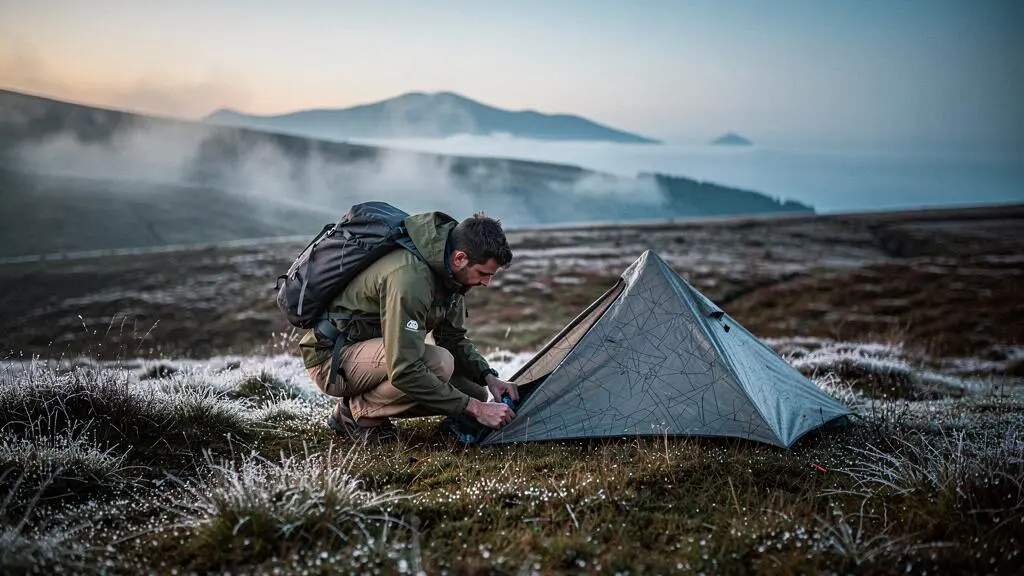
- The most critical decision is where you pitch your tent. Choosing durable ground prevents long-term “ecological scars.”
- Campfires are devastating to soil, sterilising it for years. Understanding the law and the ecological cost is essential.
- Leaving no trace also means preserving the natural sounds and smells of the wild for others.
The allure of wild camping lies in the promise of solitude and immersion in a pristine, untouched landscape. Finding that perfect spot, far from any sign of human presence, is a deeply rewarding experience. As conservation-minded campers, we all share a powerful instinct to protect these places, to leave them exactly as we found them. The common mantra is “pack it in, pack it out,” and while this is a vital starting point, it barely scratches the surface of what it means to have zero impact.
Many well-intentioned campers make mistakes, believing that organic waste like an apple core is a harmless gift back to nature, or that a small, well-managed fire leaves no lasting mark. These common assumptions, however, are based on a misunderstanding of how fragile wild ecosystems truly are, especially in the unique conditions of UK uplands and coastal areas. True zero-impact practice isn’t just about following rules; it’s about understanding the hidden consequences of our actions.
But what if the key to genuine preservation wasn’t just a checklist, but a deeper understanding of the ecological principles at play? This guide moves beyond the basics to explore the science and specific techniques of Leave No Trace. We will delve into why a simple banana skin can be a long-term pollutant, how to correctly manage human waste to prevent the spread of pathogens, and why the single choice of where you pitch your tent is more critical than any other. By mastering the “why” behind the rules, you can become a true steward of the wild.
This article provides a detailed framework for making informed, responsible decisions in the wild. The following sections break down the most critical and often misunderstood aspects of zero-impact camping, equipping you with the knowledge to protect the landscapes you love.
Summary: How to Leave Absolutely Zero Trace When Wild Camping in Sensitive Environments
- Why Orange Peels and Banana Skins Take 2 Years to Decompose in UK Uplands
- How to Dig and Disguise Catholes That Decompose Waste Without Contaminating Water
- Groundsheet Tent or Tarp Shelter: Which Leave No Trace Option Damages Vegetation Less
- The Campsite Choice That Creates Visible Scars Lasting 5+ Years on Fragile Terrain
- What Ground Conditions Mean You Should Skip Wild Camping to Avoid Permanent Damage
- The Fire Mistake That Results in £1,000 Fines and Permanent Wild Camping Bans
- Why Coastal Air Contains Negative Ions That Reduce Stress Hormones by 30%
- How to Wild Camp Legally in England, Scotland and Wales Without Fines or Conflict
Why Orange Peels and Banana Skins Take 2 Years to Decompose in UK Uplands
The idea of tossing an apple core or banana peel into the undergrowth feels natural, almost like a contribution to the ecosystem. Unfortunately, this is one of the most common and damaging misconceptions in wild camping. “Biodegradable” does not mean “instantaneously disappears.” In the cool, often acidic and low-microbe environments of UK uplands, the decomposition process is dramatically slower than in a garden compost bin. In fact, research shows that orange peels can take up to 2 years to fully break down, and banana peels are on a similar timeline.
During this long period, the food waste is simply litter. It’s an eyesore that shatters the sense of wildness for others. More importantly, it can habituate wildlife to human food, altering their natural foraging behaviours and potentially making them aggressive or dependent. Animals that learn to associate trails and campsites with easy meals are more likely to have negative encounters with humans. As one Pacific Crest Trail thru-hiker aptly put it, this practice is a form of pollution.
If you throw them in the woods, you are littering; you are not giving back to the earth or helping the animals find food.
– PCT thru-hiker, The Trek contributor, Orange Peels Don’t Belong in the Forest
The core principle is simple: if you carried it in, you must carry it out. This applies to every single item, including leftover food, nut shells, and fruit peels. The best practice is to carry a dedicated, sealable bag for all food waste. This not only keeps your pack clean but also ensures that the only thing you leave behind are your footprints.
How to Dig and Disguise Catholes That Decompose Waste Without Contaminating Water
Managing human waste is arguably the most intimidating aspect of zero-impact camping, yet it is critically important for protecting water sources and preventing the spread of disease. When no toilet facilities are available, the primary method recommended by Leave No Trace experts is the cathole. However, simply digging a shallow hole is not enough; there is a specific science to creating a cathole that effectively and safely decomposes waste.
The main goal is to locate the waste in the top layer of organic soil, where microbes are most active, while being far enough from water to prevent contamination. Studies suggest that pathogens from human waste can remain viable for up to 2 years, making proper placement and depth essential. A poorly sited or too-shallow cathole can result in pathogens being washed into streams or rivers during heavy rain, posing a serious risk to wildlife and other people downstream.
Toilet paper is another critical consideration. Even plain, unperfumed brands decompose slowly and are often dug up by animals. The only responsible method is to pack it out. Carry a small, opaque, zip-locked bag for this purpose. It may seem unpleasant, but it’s a non-negotiable part of being a responsible wild camper.
Your Field Guide: Digging a Proper Cathole
- Select a Site: Walk at least 200 feet (about 70 adult paces) from any water source, trail, or campsite. Look for rich, dark soil, which indicates high microbial activity.
- Dig the Hole: Using a small trowel, dig a hole that is 6-8 inches deep and 4-6 inches in diameter. This depth is crucial for effective decomposition and to prevent animals from digging it up.
- Deposit and Stir: After depositing your waste, use a stick to stir it with the soil at the bottom. This significantly speeds up decomposition by introducing microbes directly to the waste. Leave the stick in the hole.
- Backfill and Disguise: Fill the hole back in with the original soil you dug out. Tamp it down with your foot, and then disguise the surface with natural materials like leaves or pine needles so it’s completely unnoticeable.
- Pack Out Paper: Place all used toilet paper and hygiene products in your designated sealed bag to carry out.
Groundsheet Tent or Tarp Shelter: Which Leave No Trace Option Damages Vegetation Less
Every time you pitch a shelter, you are inevitably impacting the ground beneath it. The choice between a traditional tent with a built-in groundsheet and a more minimalist tarp setup involves a trade-off in terms of vegetation damage. A tent’s groundsheet completely blocks sunlight and flattens everything beneath it. While this provides comfort and protection, it can crush delicate plant life. A tarp, pitched with a separate, smaller groundsheet (or none at all), allows for more flexibility to pitch around sensitive plants and maintain airflow and some light penetration.
However, the type of shelter is less important than the two factors you can control: site selection and duration. The goal is to minimise the intensity and length of the pressure on the ground. Grass is relatively resilient and can bounce back from being flattened for a single night. Mosses, lichens, and fragile alpine flowers, however, are far more susceptible to crushing damage and can take years to recover, if they recover at all.
This macro-level view of a patch of grass recovering shows the direct physical impact of a tent’s footprint. The flattened, pale blades are a stark reminder of the pressure exerted by our presence.
Regardless of your shelter, the key principle is to camp for only one night in any given spot and to pack up early. This gives the vegetation the maximum amount of time to recover. When you break camp, take a moment to “fluff up” any matted grass with your hands to aid its recovery. The less time the ground is covered, the smaller your impact will be, whether you use a tent or a tarp.
The Campsite Choice That Creates Visible Scars Lasting 5+ Years on Fragile Terrain
The single most important Leave No Trace decision you will make is where to camp. The wrong choice can create visible ecological scars that persist for years, long after you’ve gone. The core principle, as stated by the National Park Service, is a profound shift in mindset: a good campsite is found, not made. This means resisting the urge to clear vegetation, move rocks, or dig trenches to create a “better” spot.
A good campsite is found and not made. When selecting a campsite in more popular areas, concentrate use. Use established campsites where possible. In more remote, pristine areas, avoid places where impacts are just beginning.
– National Park Service, Leave No Trace – Glacier Bay National Park
To find a good campsite, you must learn to identify durable surfaces. These are areas that can withstand traffic and camping without being permanently damaged. The durability of surfaces exists on a spectrum:
- Most Durable: Rock, gravel, sand, and dry grasses. These should always be your first choice.
- Moderately Durable: Ice and snow. Excellent options when available.
- Least Durable: Living vegetation, fragile soil, and especially mosses and lichens found in sensitive upland or coastal environments. These areas should be avoided at all costs.
In popular, high-use areas, the strategy is to concentrate impact. This means using existing, well-established campsites. It might seem counter-intuitive, but it’s better to reuse a spot that is already impacted than to create a new scar nearby. In pristine, remote areas, the strategy is the opposite: disperse use. Camp on the most durable surface you can find, and choose a site where no one has camped before, ensuring you leave no sign of your visit so the next person also has a pristine experience.
What Ground Conditions Mean You Should Skip Wild Camping to Avoid Permanent Damage
A true Leave No Trace practitioner knows when to say “no.” Sometimes, the best way to leave no trace is to not camp in a particular spot at all, or even to turn back. Recognizing “red flag” ground conditions is a critical skill that separates a novice from an expert. The goal is to avoid areas that are either exceptionally fragile or are showing the first signs of human impact, as this is where long-term damage begins.
The first red flag is the presence of incipient trails or campsites. These are unofficial paths or flattened areas where others have started to stray from durable surfaces. They represent the beginning of an ecological scar. Using these spots, or creating another one nearby, reinforces the damage and accelerates the creation of a permanent, ugly “social trail” or overused campsite. When you see these signs, it’s a clear signal to move on and find a more pristine, durable location.
Another major red flag is the condition of the micro-terrain. Pay close attention to the ground cover. Are you on resilient dry grass, or are you standing on a delicate carpet of moss, lichen, or tiny alpine flowers? These fragile ecosystems can be destroyed by a single footstep or the pressure of a tent. Similarly, waterlogged or boggy ground is extremely susceptible to being churned up and damaged. If the ground feels soft and spongy, or if you see rare vegetation, it’s not a suitable place to camp.
Ultimately, this requires a conscious and sometimes difficult decision. It might mean hiking further than planned to find a suitable spot or choosing a less “perfect” location that is on rock or sand instead of a beautiful but fragile meadow. This foresight and willingness to prioritise the health of the environment over personal convenience is the hallmark of a responsible camper.
The Fire Mistake That Results in £1,000 Fines and Permanent Wild Camping Bans
A crackling campfire is a romantic image of life in the outdoors, but in the context of UK wild camping, it is almost always a mistake with severe legal and ecological consequences. In most of England and Wales, lighting a fire on land without the owner’s permission is illegal. In National Parks and areas with Public Space Protection Orders, you can face fines of up to £1,000. Beyond the law, the environmental impact is devastating and long-lasting.
The most significant damage occurs beneath the flames. The intense heat of a campfire causes soil sterilization. Scientists have recorded temperatures over 1,200°F (650°C) in the soil beneath burning logs. This extreme heat kills the vital community of microbes, fungi, and insects that are essential for soil health and nutrient cycling. A sterilised patch of earth can take many years, or even decades, to recover its biological function. The result is a permanent black scar on the landscape.
Even if you use a pre-existing fire ring, you are still contributing to the problem by creating a demand for firewood. Campers breaking branches off living trees causes irreparable damage, while collecting deadwood removes a crucial habitat for insects and fungi. The safest, most responsible, and legally sound approach is to not have a fire at all. Instead, rely on a good camping stove for cooking and pack warm layers for heat. A stove is more efficient, leaves absolutely no trace, and allows you to cook regardless of the weather.
Why Coastal Air Contains Negative Ions That Reduce Stress Hormones by 30%
While scientists have explored the psychological benefits of natural environments, such as the potential for negative ions in coastal air to reduce stress, the most profound experience of wild places comes from their unspoiled sensory landscape. A core, yet often overlooked, principle of Leave No Trace is to preserve this natural atmosphere. This goes beyond visual impact; it means protecting the natural “soundscape” and “smellscape” for wildlife and for other visitors.
One of the key tenets is to “let nature’s sounds prevail.” This means keeping voices low and avoiding loud noises. The sound of shouting or music carries surprisingly far in open landscapes, shattering the sense of peace and solitude that people seek in the wild. It also causes significant stress to wildlife, disrupting their feeding, mating, and resting patterns. Using headphones is a simple act of respect if you want to listen to music or a podcast.
Preserving the natural air quality is equally important. This is why it’s recommended to use only plain, white, non-perfumed toilet paper. The chemicals and perfumes in scented products are pollutants in a natural environment. The goal is to ensure that the only smells are those of the earth, the trees, and the sea. As the National Park Service advises, our presence should be as unobtrusive as possible in every sense.
Let nature’s sounds prevail. Avoid loud voices and noises.
– National Park Service, Leave No Trace Seven Principles
By being mindful of the noise and smells we introduce, we protect the intangible qualities of the wilderness. We allow ourselves and others to fully experience the restorative power of nature, whether it’s the sound of the wind in the grass, the call of a distant bird, or the clean scent of salt and pine.
Key Takeaways
- Organic is Not Invisible: Food scraps like banana peels are long-term litter that harm wildlife and spoil the wilderness for others. Always pack them out.
- Impact is in the Details: True zero-impact camping is about understanding the science, from soil sterilization under fires to pathogen lifecycles in the ground.
- The Ground is Your Guide: Your single most important choice is where you camp. Learning to identify and use durable surfaces is the ultimate Leave No Trace skill.
How to Wild Camp Legally in England, Scotland and Wales Without Fines or Conflict
Understanding the legal framework for wild camping in the UK is essential to avoid conflict and potential fines. The rules vary significantly between the constituent countries, and ignorance of the law is not a valid defense. The most liberal access rights are found in Scotland, but even there, “freedom to roam” comes with clear responsibilities.
In Scotland, the Land Reform (Scotland) Act 2003 grants a statutory right to wild camp on most unenclosed land. However, this right is governed by the Scottish Outdoor Access Code, which is based on responsible behaviour. As legal experts from Shepherd and Wedderburn clarify, this right is for lightweight, short-term camping, and campers must act with respect for the environment and other people. The code specifically advises campers to stay well away from buildings and to avoid enclosed fields with crops or farm animals. Certain areas, like Loch Lomond and The Trossachs National Park, have seasonal byelaws requiring a permit.
The Scottish Outdoor Access Code defines wild camping as ‘lightweight, done in small numbers and only for two or three nights in any one place’, and campers must respect people’s privacy and peace of mind, help land managers work safely, care for the environment and keep dogs under control.
– Shepherd and Wedderburn, Right to roam – Wild camping legal rights in Scotland
In England and Wales, the legal situation is much stricter. There is no general legal right to wild camp. Technically, you need the landowner’s permission to camp on any land. While wild camping is often tolerated in some upland areas (like parts of the Lake District and Snowdonia) if practiced responsibly and well away from roads and settlements, this is a matter of tolerance, not a right. On Dartmoor, a recent court ruling has clarified that camping must be done in designated areas. Camping on any other private land without express permission is an act of civil trespass.
The key to avoiding conflict is to be discreet, arrive late, leave early, and be utterly respectful by following all Leave No Trace principles. If you are ever asked to move on by a landowner or their representative, you must do so politely and without argument.
Your next step is to internalize these principles, making them second nature. Practice them on your next trip, not as a set of restrictive rules, but as a proactive way of engaging with and protecting the wild spaces you love. Become a true steward of the wilderness.