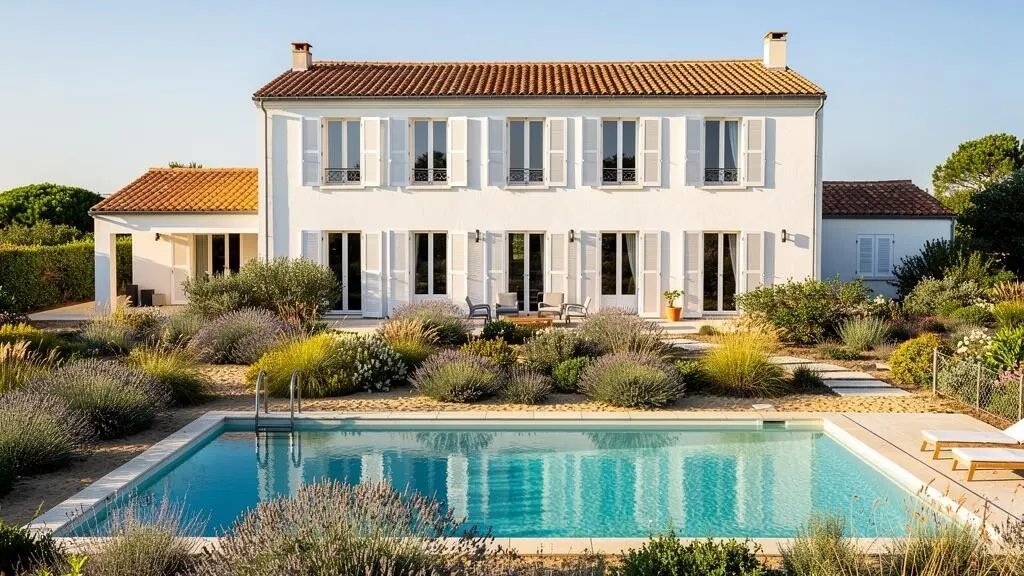
Choosing a private villa on Île de Ré transforms a standard French holiday into an authentic island retreat. This Atlantic jewel, connected to La Rochelle by a graceful bridge, offers white-shuttered villages, cycling trails threading through salt marshes, and beaches that stretch for miles without the usual Côte d’Azur crowds. The challenge isn’t finding a villa—it’s selecting the right one in the right village, at a realistic price, without falling for misleading listings. Most renters focus entirely on pool photos and bedroom counts, then discover their chosen village doesn’t match their holiday rhythm. This guide cuts through the marketing fluff to help you match villa type, village character, and budget to your actual needs for summer.
The island’s ten villages each possess distinct personalities, shaped by their geography and tourist infrastructure. Understanding these differences before browsing villa listings prevents expensive mismatches between expectation and reality.
Weekly rental prices operate on a sharp seasonal curve, with peak July–August weeks commanding premiums three to five times higher than off-season rates. Securing the right property requires booking six to eight months ahead and confirming which amenities genuinely matter for your travel dates.
Your villa selection priorities in 30 seconds:
- Village character matters more than villa features—match your group’s pace to Saint-Martin’s buzz, Le Bois-Plage’s family balance, or Les Portes’ quieter rhythm
- Weekly rentals start from €511, but expect €1,800–3,500 for July–August villas sleeping 8–12 with pools
- Book 6–8 months ahead for peak summer; shoulder seasons (May, June, September) offer better value and last-minute availability
- Air conditioning isn’t standard in all French villas—confirm coverage before committing if travelling in July or August
Why a private villa unlocks Île de Ré’s authentic charm
Hotels on Île de Ré cluster around Saint-Martin-de-Ré and Rivedoux-Plage, offering concierge convenience but limiting your connection to island life. A private villa drops you into a residential street where neighbours cycle to the morning market and oyster farmers return from the salt flats at dusk.
The island’s compact geography—just 30 kilometres from east to west—means that when you choose a private villa for your getaway on Île de Ré, you gain both roots and flexibility. Your rented kitchen becomes the staging ground for picnics assembled from village markets; your private pool offers an alternative when beaches feel too exposed on windy Atlantic afternoons. Most critically, a villa accommodates multi-generational dynamics—grandparents who prefer morning terrace coffee to beach expeditions, teenagers who need their own space, young children who nap on their own schedule.
Location specificity separates successful villa holidays from frustrating ones. A stunning property in the wrong village derails the entire experience. Families with young children who book a Saint-Martin-de-Ré villa expecting tranquillity discover a UNESCO-heritage harbour town that thrums with evening restaurant crowds and August market-day congestion. Conversely, couples seeking village life who settle in remote farmhouse conversions find themselves cycling 8 kilometres each way for fresh bread.
As the official tourism observatory for Destination Île de Ré monitors continuously, visitor flows vary dramatically by location and season. Understanding these differences before you browse villa photos saves you from expensive mismatches.
Choosing your village: where to base your Île de Ré escape
Île de Ré’s ten villages divide into three personality types: historic hubs with evening energy, family-oriented middle-ground villages with beach access and cycling infrastructure, and quieter northern and western retreats favoured by those escaping rather than exploring. Your choice here matters more than pool size or bedroom count.
Saint-Martin-de-Ré wears its UNESCO credentials prominently. The fortifications designed by Vauban were inscribed on the World Heritage List on 7 July 2008, and the village has leaned into that status with careful preservation of its harbour-front architecture and weekend art markets. This is Île de Ré’s social centre—the village where restaurants stay open latest, where the Wednesday morning market sprawls across multiple streets, where evening harbour strolls turn into impromptu wine stops. The trade-off is density. August sees parking restrictions tighten, pavements fill, and the intimate island atmosphere dilute into something closer to a bustling market town. Families with teenagers often thrive here; those with toddlers seeking calm may not.
Le Bois-Plage-en-Ré occupies the island’s centre-south, offering the balance many groups need: beaches wide enough to absorb summer crowds, cycling distance to both Saint-Martin and quieter western villages, and a village centre with bakeries and grocers but without Saint-Martin’s evening intensity. The long Plage de Gros-Jonc suits families with children who need shallow water and space to spread out. This village attracts the highest proportion of repeat renters and features predominantly modern builds or sympathetic renovations.
Les Portes-en-Ré anchors the island’s northern tip, where salt marshes meet the Lilleau des Niges nature reserve and the pace slows measurably. The lighthouse marks the endpoint of the island’s main cycling route, and the village offers authentic fishing-port character without the boutique-hotel polish of Saint-Martin. Villas here cost 15–20% less than equivalent Saint-Martin properties. This suits groups who plan to cook most meals, who value reading terraces over restaurant proximity, and who won’t resent the 12-kilometre cycle to Saint-Martin when they do want evening harbour atmosphere.
The comparison below summarises how these three villages—plus Rivedoux-Plage as the eastern gateway—match different holiday priorities. Each row highlights the village’s distinct character, the type of group best suited to that atmosphere, and practical considerations like parking, pricing, and access to amenities.
| Village | Character & Atmosphere | Best Suited For | Practical Notes |
|---|---|---|---|
| Saint-Martin-de-Ré | UNESCO harbour village, lively evening scene, boutique shops, vibrant Wednesday market | Couples, teenagers, groups wanting restaurant choice and evening energy | Parking challenges July–August; premium villa pricing; central location for exploring island |
| Le Bois-Plage-en-Ré | Family beaches (Gros-Jonc), central island position, balanced atmosphere without extremes | Families with young children, multi-generational groups, repeat visitors prioritising function | Good cycling access both directions; modern villa stock; reliable village amenities without tourist intensity |
| Les Portes-en-Ré | Northern tip, fishing port authenticity, nature reserve proximity, lighthouse endpoint | Couples seeking quiet, readers, groups planning self-catering with occasional restaurant trips | 15–20% lower villa costs; 12km cycle to Saint-Martin; authentic character trades convenience for peace |
| Rivedoux-Plage | Eastern gateway just after bridge, practical rather than picturesque, large beaches | Budget-conscious groups, those planning day trips to La Rochelle, late bookers | Easiest mainland access; often better last-minute availability; less ‘authentic island’ atmosphere |
What to expect from weekly rental costs
Weekly villa rentals on Île de Ré operate on a sharp seasonal curve. The baseline figure of 511 € per week reflects off-season availability (November through March) for modest two-bedroom properties sleeping four to six guests, often without pools and in less central villages. That number serves as a useful anchor, but bears little resemblance to July–August reality.
€1,800–3,500 /week
Typical cost range for July–August villas sleeping 8–12 guests with private pools in central villages
The premium for peak season stems from simple scarcity. As local publication Ré à la Hune reported for the 2025 season, holiday rental occupancy remained virtually stable in July and August compared to the previous year, with just a 0.39% increase in overnight stays. That static supply against consistent demand keeps prices firm.
Three factors drive costs within that range. Location commands the steepest premium—a Saint-Martin-de-Ré villa with harbour views costs 30–40% more than an identical property in Les Portes-en-Ré. Pool presence adds €400–700 to weekly rates during warm months. Capacity matters less than you’d expect; a well-designed villa sleeping ten often costs only 15% more than one sleeping eight, because layout efficiency matters more than raw bedroom count.
Shoulder seasons (May, early June, and September) deliver the best value proposition. Expect to pay typically 30–60% less than peak weeks whilst still enjoying warm weather, functional beaches, and open restaurants. The cycling infrastructure remains identical, markets still operate, and the island’s essential character emerges more clearly without August’s crowds.
Watch for hidden costs that inflate the headline rate: linen and towel hire (often €15–25 per person), end-of-stay cleaning fees (€100–200), and tourist taxes (roughly €1.50 per adult per night) can push a €2,000 advertised week to €2,400 actual cost for a group of ten.
The essential amenities that transform your stay
Villa marketing photographs emphasise aesthetics—sun-drenched terraces, designer kitchens, perfectly styled bedrooms. The amenities that actually determine holiday satisfaction receive less glamorous treatment in listings, yet matter far more during a week of actual occupation.
Private pools on Île de Ré serve a different function than on Mediterranean islands. Atlantic weather brings intermittent cloud cover and occasional wind even in July, making beaches less reliably comfortable than the guaranteed calm of a sheltered pool. Families with young children particularly value the flexibility—morning beach trips followed by afternoon pool sessions that don’t require packing up equipment and cycling 3 kilometres. Pool quality varies dramatically. Older villas often feature dated tiling and basic filtration; newer builds incorporate salt-water systems, heating options, and secure fencing that meets current French safety standards. Check whether pool heating is included or costs extra (typically €150–200 weekly supplement). Unheated pools remain uncomfortably cold until mid-June and after mid-September.
Air conditioning hasn’t been universally adopted in French villa rentals the way Spanish or Italian properties have embraced it. Many traditional Île de Ré villas rely on thick stone walls, shutters, and cross-ventilation—perfectly adequate for May or September, insufficient during July heatwaves when temperatures reach 32–35°C and humidity climbs. Confirm whether air conditioning covers the entire villa or just bedrooms, as partial coverage means uncomfortable daytime living spaces. Properties without any cooling often cost €300–500 less weekly, but that saving evaporates if your group abandons the villa during afternoon heat.
Capacity and layout require careful scrutiny. Advertised capacity numbers assume maximum occupation with little margin for comfort. A villa listed as sleeping twelve typically offers four double bedrooms, two singles, and a sofa bed—functional for a fortnight with extended family, cramped for unrelated friends who each want privacy. Layout matters more than total bedrooms. Multi-generational groups need ground-floor bedroom access for elderly relatives; groups of couples prefer equal-quality bedrooms rather than one master suite and several cramped secondary rooms. Properties sleeping 8–10 in the range of four to five bedrooms generally provide the best balance of space, cost, and flexibility.
Storage and practical facilities receive little attention in listings but dominate daily villa life. Confirm adequate refrigeration capacity (one standard fridge struggles with provisions for ten people), outdoor dining furniture that seats the full group, and secure bike storage if you’re hiring cycles. The guidance on booking a luxury villa that genuinely meets expectations applies equally to mid-range Île de Ré properties.
- Confirm air conditioning coverage (bedrooms only or full property) and whether it’s included in base price
- Check pool heating availability and supplement cost for May, June, or September stays
- Verify actual sleeping capacity versus comfortable occupancy (subtract 2 from advertised maximum)
- Confirm distance to nearest village amenities (bakery, grocers, restaurants) and whether it’s cycling-friendly
- Ask about parking provisions (garage, covered carport, or just roadside) and whether it accommodates your vehicle count
- Request detailed layout plan showing bedroom distribution across floors (critical for elderly guests or those with mobility limitations)
Your booking strategy for securing the perfect villa
The most common booking mistake follows a predictable pattern: a family spots their ideal villa in February, debates whether to commit, decides to « think about it for a week, » and returns to find it already reserved for their target dates. July and August availability on Île de Ré tightens fast, particularly for well-located villas sleeping eight or more.
Book between six and eight months ahead for peak summer weeks. January through March represents the optimal window—early enough to secure good choice, late enough that owners have finalised their summer pricing. Shoulder season stays (May, early June, September) allow more flexibility; three to four months’ lead time usually suffices, and last-minute deals sometimes emerge for September when families return to school.
Red flags when browsing villa listings:
Vague location descriptions that specify « Île de Ré » without naming the actual village often indicate remote farmhouse conversions far from amenities. Photos showing exclusively exterior and pool shots with minimal interior coverage may hide dated or cramped living spaces. Capacity claims that seem optimistic (12 guests in a three-bedroom villa) typically rely on sofa beds and bunk arrangements unsuitable for adults. Listings without clear cancellation policies or damage deposit terms should trigger caution—reputable platforms and owners specify these upfront.
Cancellation terms deserve close attention before you commit, as French villa rentals traditionally operate on stricter policies than UK hotels—many require full payment 60–90 days before arrival with limited refund provisions, making travel insurance with cancellation coverage essential. Direct communication with villa owners or property managers reveals more than polished listing photos—ask specific questions about recent renovations, typical guest profiles, and whether they recommend their property for your particular village priorities. Payment methods matter for consumer protection; credit card payments through established platforms offer more recourse than bank transfers to individual owners. If booking directly with an owner to avoid platform fees, verify their property registration with French authorities (mandatory for holiday rentals) and request proof of public liability insurance. For more comprehensive guidance on distinguishing genuinely premium properties from overhyped standard rentals, the framework for identifying prestigious villas offers detailed evaluation criteria.
How far in advance should I book for July or August?
Book 6–8 months ahead for peak summer weeks. January through March offers the best selection before availability tightens. Well-located villas sleeping 8+ guests in Saint-Martin-de-Ré or Le Bois-Plage-en-Ré often secure bookings before Easter.
Is a car necessary if I rent a villa on Île de Ré?
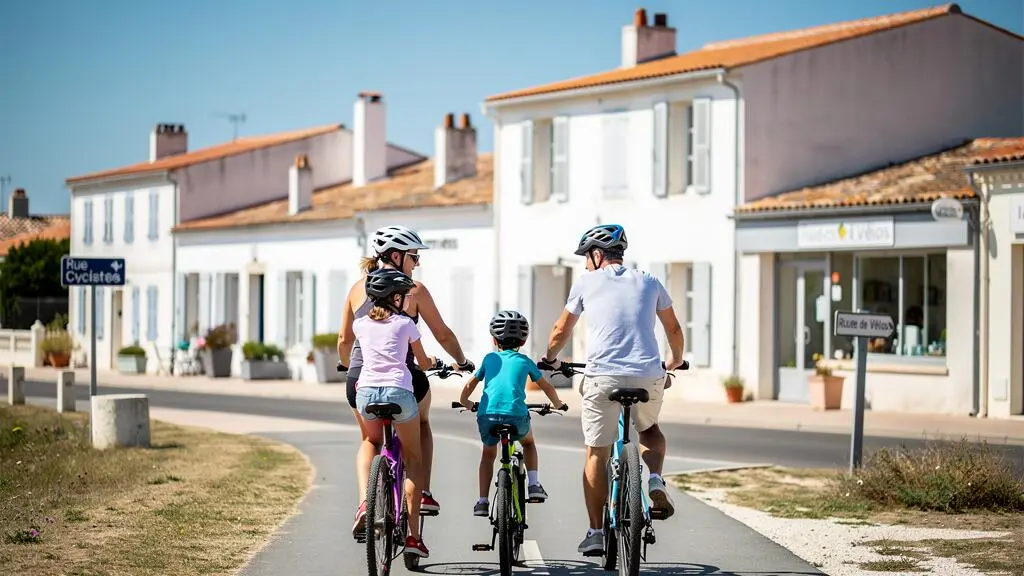
A car proves useful for arrival and large shopping trips, but becomes optional once settled. Île de Ré’s 110-kilometre cycle network connects all villages efficiently. Most groups hire bikes for the week and use cars only for mainland excursions to La Rochelle or Rochefort. Parking restrictions in village centres during summer make cycling genuinely more convenient for daily bakery runs and beach visits.
Do Île de Ré villas include linens and towels?
Policies vary. Some villas include bed linens in the base price but charge separately for towels (typically €12–18 per person). Others treat both as optional paid extras. Always confirm what’s included and what costs extra—assuming linens are provided, then discovering they’re not, creates unnecessary stress on arrival day.
What’s the typical check-in and check-out process?
Standard check-in occurs between 4pm and 6pm on Saturdays (Île de Ré operates predominantly on Saturday-to-Saturday weekly cycles during summer). Check-out by 10am the following Saturday. Some owners offer flexible timing for shoulder season stays. Confirm the exact key collection process—some properties use secure keyboxes, others require meeting the owner or property manager at the villa.
Are villas suitable for elderly guests or those with mobility issues?
This requires careful checking. Many traditional Île de Ré villas feature stairs to upper bedrooms with no ground-floor sleeping option. Newer builds and renovated properties increasingly offer ground-floor bedroom suites, but these remain less common than in purpose-built holiday complexes. Always request a detailed floor plan and confirm step-free access routes to bedrooms, bathrooms, and outdoor spaces before booking for guests with limited mobility.
- Verify the exact village location on a map and measure cycling distance to your priority amenities
- Confirm total cost including all supplements (linen, towels, cleaning, tourist tax, pool heating if needed)
- Read the full cancellation policy and arrange appropriate travel insurance with cancellation coverage
- Screenshot or save the full property listing (photos, descriptions, amenity list) as a reference point for any arrival-day discrepancies
Choosing the right villa on Île de Ré comes down to matching village character to your group’s rhythm, confirming the amenities that actually matter for your travel dates, and booking early enough to secure genuine choice rather than settling for whatever remains available. The island rewards this careful selection process with a holiday that feels authentic rather than packaged—mornings cycling to village markets, afternoons by your private pool, evenings watching harbour sunsets without the pressure of hotel checkout times or rigid meal schedules.