In summary:
- Stop relying on tourist signs; the most profound history is often unmarked and found through digital heritage registers.
- Understanding listing grades (e.g., Grade I vs. Grade II) is key to knowing what you can access.
- Always assume land is private. Learning to spot clues of private property prevents trespassing and respects landowners.
- To find solitude, visit at dawn or dusk, when even well-known spots become quiet and personal.
- Authentic cultural experiences are found in informal, ‘backstage’ settings, not ticketed ‘frontstage’ performances.
The open road promises adventure, a ribbon of asphalt connecting one point of interest to the next. For the heritage-curious driver, this often means following the ubiquitous brown signs to another magnificent, but invariably crowded, castle or stately home. We pay our entrance fee, shuffle through roped-off rooms, and leave with a brochure, feeling like we’ve ticked a box. The experience is pleasant, but is it memorable? Is it discovery?
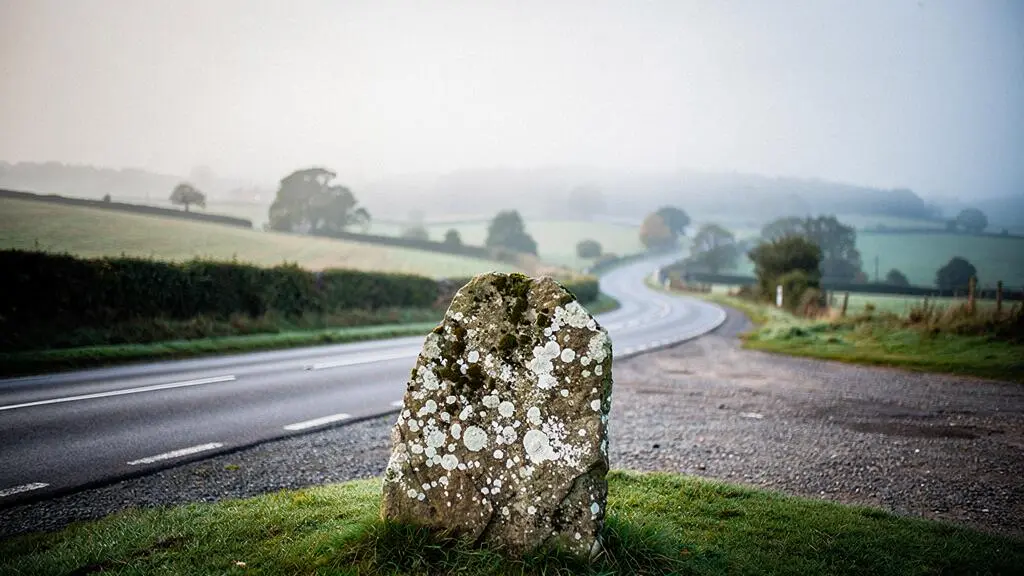
We’re told to “get off the beaten path,” but the practicalities of how to do that are often left vague. The usual advice—use Google Maps, talk to locals—rarely uncovers the truly hidden gems languishing just out of sight. These are the forgotten standing stones in a farmer’s field, the crumbling medieval wall absorbed into a village, or the moss-covered milestone that has seen centuries of travelers pass by. They don’t have gift shops or audio guides, and that is precisely where their power lies.
But what if the key to unlocking this deeper layer of history wasn’t about aimless wandering, but about a deliberate strategy? What if you could learn to ‘read’ the landscape for the historical clues that mass tourism overlooks? This guide is built on a simple premise: finding truly untouristed landmarks is a skill, not an accident. It’s about mastering a few key research tools and cultivating a mindset of active, access-aware exploration.
We will explore why small, unmarked sites offer a more intimate connection to the past than their famous counterparts. You will learn the practical steps to using official heritage registers to plot a route rich with hidden history, how to identify sites that match your personal interests, and crucially, how to visit them respectfully and legally. Finally, we will look at how to find solitude and engage with living culture in a way that is authentic, not exploitative.
This guide will equip you with the tools and perspective to transform any drive into a genuine journey of discovery. The following sections break down this new approach to heritage travel, offering a clear roadmap to finding the history hidden in plain sight.
Summary: A Guide to Finding Hidden Historical Landmarks on Any Road Trip
- Why Unmarked Standing Stones and Village Crosses Reveal Deeper History Than Tourist Castles
- How to Search Listed Building Registers for Hidden Landmarks Along Your Route
- Medieval Ruins or Industrial Heritage: Which Roadside Landmarks Match Your Interests
- The Landmark Visit Mistake That Results in Trespass Warnings at 30% of Sites
- What Time of Day Guarantees Solitude at Popular Roadside Landmarks
- Why Hidden Natural Wonders Deliver More Memorable Experiences Than Famous Landmarks
- Why Ticketed Folk Performances Rarely Reflect Acknowledge Living Cultural Practices
- How to Participate in Regional Traditions Without Offending Locals or Appearing Exploitative
Why Unmarked Standing Stones and Village Crosses Reveal Deeper History Than Tourist Castles
A grand castle, perfectly preserved and curated for tourists, tells a specific story—one of power, wealth, and national importance. It is a ‘frontstage’ performance of history, polished and presented for consumption. While impressive, this curated experience often insulates us from a more raw and personal connection to the past. An unmarked standing stone in a windswept field or a worn medieval cross at a village crossroads offers something entirely different: an invitation to use your imagination. These sites are not explained; they must be experienced.
Their power lies in their quiet persistence. A simple stone has witnessed centuries of changing seasons, farming practices, and local life, untouched by restoration crews or interpretive panels. It exists as part of the living landscape, not separate from it. Standing before such an object, you are not a consumer of history but an active participant in its continuum. You share the same view, the same wind, as countless generations before you. This creates a moment of unmediated connection that a ticketed attraction, by its very nature, cannot provide.
These humble landmarks also represent a more democratic form of history. They tell the stories not of kings and queens, but of everyday people, of ancient beliefs, of boundaries and trade routes. They are historical evidence in its purest form, prompting questions rather than providing easy answers. Why was this stone placed here? Who carved this cross? The lack of a definitive plaque is not a deficiency but an opportunity for genuine discovery, forcing us to engage our curiosity and see the landscape with new eyes.
Ultimately, the choice to seek out these places is a choice to trade spectacle for intimacy, and passive consumption for active exploration. It’s a shift from viewing history as a series of grand events to understanding it as a continuous, subtle presence in the world around us.
How to Search Listed Building Registers for Hidden Landmarks Along Your Route
The single most powerful tool for the roadside heritage scout is not a map, but a database. National and local governments meticulously maintain listed building registers, vast catalogues of protected historical assets. These are not just for academics or conservationists; they are treasure maps for anyone seeking to find history beyond the obvious. In England alone, there are over 379,580 listed buildings, the overwhelming majority of which are not major tourist attractions.
Searching these registers online is the key to proactive discovery. Most have searchable maps, allowing you to trace your driving route and see exactly what listed structures lie within a few miles of the road. You can filter by type (milestones, crosses, barns, bridges) and, crucially, by grade. Understanding these grades is essential for planning a visit. While Grade I properties are often major, ticketed sites, the vast majority—around 94%—are Grade II. These are the forgotten gems: the old post boxes, village pumps, and ruined walls that are often publicly visible and accessible without a fee.
This process transforms your journey. Instead of waiting for a brown sign to tell you what’s important, you arrive with a pre-researched list of unique, often overlooked sites. You are no longer a passive tourist but an active explorer with a specific mission. The thrill comes from finding a small, beautiful piece of history that thousands of people drive past every day without noticing. The texture of a weathered milestone or the simple carving on a village well becomes a personal discovery, not a pre-packaged experience.
This table, based on information from UK local authorities, clarifies what these official designations typically mean for an independent visitor. As shown in a breakdown of listed buildings, the most accessible history is often found in the most common designation.
| Designation | Approx. Share of Listed Assets | What It Typically Means for Visitors |
|---|---|---|
| Grade I | ~2% | Exceptional interest; often major sites, sometimes with restricted or ticketed access |
| Grade II* | ~4% | Particularly important; mix of private and semi-public structures |
| Grade II | ~94% | Special interest; the vast majority are ordinary roadside structures, often visible or accessible without a ticket |
This methodical approach, using official data to guide your exploration, is the core of what it means to be a modern heritage scout. It’s about using digital tools not to distract from the real world, but to engage with it on a deeper, more meaningful level.
Medieval Ruins or Industrial Heritage: Which Roadside Landmarks Match Your Interests
Once you’ve unlocked the power of heritage registers, you’re faced with a wonderful problem: an overwhelming abundance of choice. The landscape is suddenly populated with thousands of potential stops. To avoid being paralyzed by this newfound wealth of history, the next step is to focus your search. Instead of randomly picking dots on a map, you can curate your journey by aligning it with your own personal interests. This turns a simple road trip into a thematic quest.
Ask yourself: what stories truly fascinate you? Are you drawn to the deep time of prehistoric Britain, with its enigmatic stone circles and burial mounds? Or does the clash of swords and the romance of chivalry lead you to seek out the crumbling remains of medieval castles and monastic granges? Perhaps your interest lies in the more recent past. The Industrial Revolution, for example, has left an indelible mark on the landscape, from the silent ruins of Cornish tin mines to the elegant arches of canal aqueducts. Each tells a powerful story of innovation, labour, and societal change.
Defining your interest allows you to apply a powerful filter to your search. Most heritage databases allow you to search by keyword or category. By searching for “textile mill,” “World War II pillbox,” or “Roman road,” you can craft a journey that is not just a collection of random old things, but a rolling seminar on a topic you love. This approach also deepens your understanding. Visiting multiple sites of a similar type—for instance, three different types of lime kilns in one county—allows you to notice patterns, compare technologies, and build a far richer, more nuanced picture than a single, isolated visit ever could. You begin to develop an expert eye for detail, recognizing regional styles and historical evolutions.
Ultimately, this is about making the journey your own. The goal is not to see what you’re “supposed” to see, but to follow your own curiosity. Whether you’re a fan of ecclesiastical architecture or abandoned railway lines, aligning your route with your passion is the secret to a truly unforgettable and educational road trip.
The Landmark Visit Mistake That Results in Trespass Warnings at 30% of Sites
The thrill of spotting a forgotten ruin in a distant field can be intoxicating. In that moment of discovery, it’s easy to hop a fence or follow a faint track to get a closer look. This is, however, the single most critical mistake a heritage scout can make. Many of the most intriguing untouristed landmarks are on private land, and the line between curious explorer and illegal trespasser is dangerously thin. Understanding the rules of access is not just about being polite; it’s about respecting the law and ensuring this type of exploration remains sustainable.
The concept of trespassing varies by region, but the principle is universal: you do not have the right to enter private property without the owner’s permission. While some jurisdictions require landowners to post warning signs, many do not. For example, a state-by-state review of trespassing sign laws in the US shows that nearly half the states do not require posted signs for land to be considered private. The responsibility is on the visitor to assume land is private unless proven otherwise. The presence of a fence, a closed gate, or even a line of cultivated crops is a clear signal to keep out. Ignoring these clues is not adventurous; it’s disrespectful and potentially illegal, risking confrontations with landowners and damaging the reputation of all responsible explorers.
This is where “access-aware exploration” becomes a core skill. Before you even set out, your research should include a close look at public rights of way. In the UK, Ordnance Survey maps are invaluable, clearly marking public footpaths, bridleways, and byways. In other regions, local government or parks websites often provide similar data. Use satellite imagery to scout your approach. Does the path to the landmark look like a well-defined public trail or a private farm track? The responsible explorer knows that sometimes the best view is from the public road, with a pair of binoculars. The goal is a momentary connection with history, not a permanent criminal record.
Your 5-Point Checklist for Visiting with Respect
- Identify Boundaries: Before leaving your car, visually check for fences, gates, or “Private Property” signs. Remember, the absence of a sign does not automatically grant access.
- Consult Digital Maps: Use satellite and street-level views in mapping apps to look for clear public footpaths or access roads. In many countries, dotted lines on official maps indicate public rights of way.
- Assess the Context: Is the landmark in a working farm field (likely private), part of a churchyard (likely public access), or within the bounds of a private garden (definitely private)? Context is your best guide.
- Confirm Right of Way: If you have any doubt, do not proceed. The most responsible action is to consult official sources, such as local council websites or dedicated hiking apps that show legal property boundaries and public trails.
- Plan for “No”: Have an alternative site in mind. If access looks ambiguous or feels wrong, the respectful choice is to admire the site from a distance and move on. The adventure is in the search, not the trespass.
By prioritizing respect for private property, we not only protect ourselves but also act as ambassadors for a more thoughtful, considerate form of tourism, ensuring that these hidden corners of the world remain accessible for future discovery.
What Time of Day Guarantees Solitude at Popular Roadside Landmarks
Even the most famous landmarks can feel like private discoveries if you time your visit correctly. The secret to finding solitude is often not about *what* you visit, but *when* you visit. The modern phenomenon of overtourism, where historic sites become overwhelmed by visitor numbers, illustrates this point on a grand scale. While a small roadside ruin might not see the 7,709 tourists per resident found in Vatican City, the principle remains the same: crowds degrade the experience.
The key is to operate outside the rhythm of mainstream tourism. The vast majority of travelers visit sites between 10 a.m. and 4 p.m. To experience a place in quiet contemplation, you must plan to be there during the “golden hours” of dawn or the “blue hour” of dusk. Arriving at a ruined abbey as the first light of dawn cuts through the morning mist is a profoundly different experience from visiting at midday surrounded by tour buses. The silence, the quality of the light, and the sense of having the place to yourself transforms it from a tourist attraction into a personal sanctuary.
Case Study: The Peak Hour Bottleneck
The concept of “overtourism” in historic cities like Venice provides a powerful lesson for any heritage traveler. Research shows how narrow streets and famous squares, built for a different scale of life, become completely gridlocked when too many visitors converge on the same landmarks during peak hours. This creates a stressful, unpleasant bottleneck that diminishes the experience for everyone. Even at a small roadside landmark, the arrival of just one or two other cars at the same time can shatter the sense of peace and discovery. By consciously avoiding these peak times, you are opting out of the bottleneck and choosing a higher quality experience.
This strategy of “intentional solitude” requires planning. It might mean an early start, packing a flask of hot coffee, and having a headlamp ready. It could involve planning your day’s drive to end at a specific landmark just as the sun sets. The light is better for photography, the wildlife is more active, and the atmosphere is thick with the weight of history. You are no longer just seeing a place; you are feeling its presence. This is particularly true for atmospheric sites like stone circles or ancient woodlands, whose character is completely transformed by the low, dramatic light of dawn and dusk.
By simply shifting your schedule, you can reclaim a sense of wonder and personal connection even at well-known sites, turning a simple visit into a lasting memory.
Why Hidden Natural Wonders Deliver More Memorable Experiences Than Famous Landmarks
While historical landmarks connect us to the human past, hidden natural wonders connect us to something deeper and more elemental. The experience of stumbling upon a secluded waterfall, a secret cove, or a panoramic viewpoint known only to locals often leaves a more indelible mark than a visit to a famous monument. The reason lies in the psychology of discovery and the absence of expectation.
Famous landmarks come with a heavy weight of cultural baggage. We’ve seen them on postcards, in movies, and on countless Instagram feeds. Before we even arrive, our minds are saturated with pre-conceived notions of what we are supposed to see and feel. This often leads to a subtle form of “checklist tourism” and the potential for disappointment if the reality doesn’t match the idealized image. A hidden natural wonder, by contrast, comes with no such baggage. It is a blank slate for our senses.
The experience is yours alone. When you find a place that isn’t in the guidebook, you are not following in the footsteps of millions, but creating your own path. This fosters a powerful sense of ownership and personal connection. The memory is not of “seeing the famous arch” but of “that time I followed a small stream and found that incredible hidden arch.” The latter is a story, a personal narrative of exploration. This process of discovery—the uncertainty, the curiosity, the eventual reward—activates our brains in a way that passive sightseeing cannot. It’s the difference between being told a story and writing one yourself.
Furthermore, these sites offer a moment of genuine awe and tranquility, a respite from our hyper-connected world. The sound of the wind in the trees, the feel of cold river water, the sheer scale of a cliff face—these sensory inputs ground us in the present moment. In the end, the most memorable travel experiences are not just about what we see, but about what we feel. And the feeling of personal, unscripted discovery in the heart of nature is one of the most powerful feelings of all.
Why Ticketed Folk Performances Rarely Reflect Actual Living Cultural Practices
The desire to connect with the authentic culture of a region is a noble one for any traveler. This often leads us to seek out local music, dance, or festivals. However, it’s crucial to understand the difference between a living cultural practice and one that has been packaged for tourist consumption. Many ticketed folk performances, while entertaining, operate as what sociologists call “staged authenticity.” They present a polished, predictable, and often simplified version of a tradition for an outside audience.
In his seminal work, sociologist Dean MacCannell defined this as a process where cultural elements are arranged specifically for visitors. As he described it, this is:
A process where tourism-providers put their culture on display to attract travelers seeking genuine experiences.
– Dean MacCannell, Staged Authenticity: Arrangements of Social Space in Tourist Settings, American Journal of Sociology (1973)
This creates a “frontstage” area for tourists, which is separate from the “backstage” where the community’s real cultural life happens. The performance you pay to see might be beautiful, but it may have been shortened, altered, or stripped of its original context to be more palatable to a visitor’s schedule and expectations. The songs might be the “greatest hits” rather than the nuanced pieces shared among community members.
The Frontstage/Backstage Divide in Practice
Academic research on the traditions of communities like the Cham in Southeast Asia clearly illustrates the frontstage/backstage distinction. Studies show how performances tailored for tourist audiences are deliberately separated from the community’s own “backstage” practices, which are reserved for their private spiritual and social lives. This research highlights how shaping traditions for tourist consumption can alter their meaning and affect the perceived authenticity of the culture itself, both for insiders and outsiders.
Recognizing this isn’t about being cynical; it’s about being a more discerning and respectful traveler. The truly authentic cultural encounters often happen in informal, unscripted settings: the impromptu music session in the corner of a village pub, the local festival that isn’t advertised in tourist brochures, or the community gathering you are kindly invited to observe. These are the “backstage” moments, and they are not for sale.
The goal is to shift our mindset from being a consumer of culture to being a respectful observer, ready to appreciate authenticity in whatever humble form it takes.
Key takeaways
- True discovery lies in seeking the unmarked and un-curated history that exists just beyond the main roads, accessible through tools like heritage registers.
- Respectful exploration is paramount; understanding access rights and private property laws is a non-negotiable skill for the modern heritage scout.
- Authenticity is found in the unscripted moments: the solitude of a ruin at dawn or an informal cultural gathering, not in a ticketed, “frontstage” performance.
How to Participate in Regional Traditions Without Offending Locals or Appearing Exploitative
Armed with the knowledge that the most authentic cultural experiences often happen “backstage,” the sensitive traveler is left with a critical question: how do I access that world without being intrusive, offensive, or exploitative? The answer lies in shifting your mindset from a “participant” to a “respectful guest.” It’s about creating the conditions for an invitation, rather than demanding entry.
The first and most important rule is to be an observer first. If you stumble upon a local event or gathering, your first action should be to watch from a respectful distance. Pay attention to the social cues. Is it a solemn occasion or a joyous one? How are people dressed? Your initial role is to be invisible, to learn the rhythm of the event before even considering a more active role. This posture of humility and genuine curiosity is often what leads to an invitation to join in. A friendly nod, a quiet smile, and a patient presence are your most powerful tools.
Supporting the local economy is another powerful, non-intrusive way to participate. Instead of just taking photos, buy the handcrafted item from the artisan. Eat at the family-run cafe and compliment the food. Pay the small entrance fee to the local community museum. These financial transactions, when done with genuine appreciation, are a form of participation. They provide the resources that help keep these traditions alive. Learning even a few words in the local language—”hello,” “please,” “thank you,” “beautiful”—can also transform an interaction from a simple transaction into a moment of human connection. It signals that you see them as a culture to be respected, not just a service to be consumed.
Ultimately, the most authentic participation is unplanned. It comes from showing genuine interest, being patient, and putting your camera away to be present in the moment. When you approach a new culture with humility and an open heart, you are no longer an outsider looking in, but a welcome guest sharing in a small piece of its living history. Begin your next journey with this mindset, and you’ll find the authentic experiences you’re looking for.