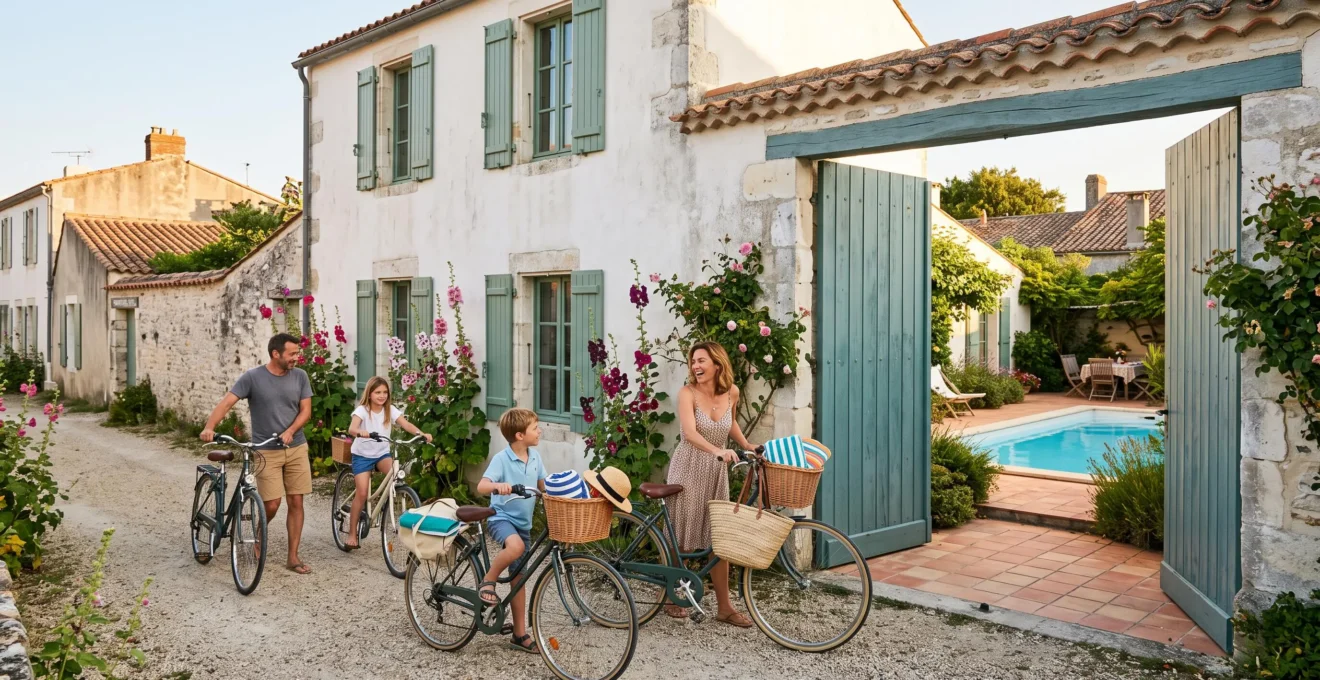
Direct answer: On the Île de Ré, the best choice between a private villa and a hotel depends on your travel style, the season, and the size of your group. A villa offers more space and independence, making it a strong option for families or groups planning a week-long stay. A hotel is often more convenient for short breaks, thanks to services such as reception and housekeeping.
If you are choosing between a villa and a hotel on the Île de Ré, start with one simple question: would you prefer a home base that you manage yourselves, or a stay where most practical details are taken care of for you? During the busier months, availability and booking conditions can be just as important as comfort.
The Destination Île de Ré Tourist Office reports that around 92% of its visitors arrive between April and October, including 41.5% in July and August. The island can also exceed 150,000 people during the summer peak. These figures help explain why accommodation availability and prices can vary significantly depending on when you travel.
What to compare before you book on the Île de Ré
- Autonomy vs services: cooking, laundry, and privacy versus reception, housekeeping, and on-site help.
- Total cost: villa “extras” (cleaning, linens, deposit) versus hotel add-ons (breakfast, parking) depending on the property.
- Location and mobility: village centre convenience versus quieter areas—especially important if you rely on bikes.
- Group size: villas can become better value per person as you fill bedrooms; hotels can be simpler for two people or short stays.
- Peak-season pressure: in July–August, availability tightens; flexibility often becomes a deciding factor.
- Private villa vs. hotel on the Île de Ré: what really sets them apart
- How much does a stay in a villa or hotel on the Île de Ré cost?
- How to spot a truly prestigious luxury villa versus an overpriced rental
- Which accommodation suits your traveler profile?
- Booking the right way: key steps before confirming
Private villa vs. hotel on the Île de Ré: what really sets them apart
The real difference is not “luxury” versus “basic”. It is how your stay is organised: a villa gives you control (space, kitchen, schedules), while a hotel gives you structured services (reception, housekeeping, sometimes breakfast) and day-to-day simplicity.
On the Île de Ré, this plays out very concretely because travel is often built around beaches, bike rides, markets, and village life. A villa can be perfect if your plan includes slow mornings, shared meals, and downtime at “home”. A hotel can be the better tool if you want to maximise time out and keep logistics light.
| Criterion | Private villa | Hotel |
|---|---|---|
| Space & privacy | Entire place for your group; outdoor areas can be a key part of the experience | Private room; shared spaces depend on the property |
| Daily services | Usually self-managed; cleaning/linens may be optional or scheduled | Reception and services are part of the model; details vary by hotel |
| Meals | Kitchen lets you control budget and routines | Easy breakfasts and dining options; can be convenient for short breaks |
| Flexibility of stay length | Often oriented to week stays in peak season (varies by owner/agency) | Typically easier for 1–3 nights and changing plans |
| Location patterns | Can be outside the busiest centres; great for calm, but check distances | Often positioned for immediate access to village life and services |
| Best fit | Families, groups, longer stays, travellers who enjoy autonomy | Couples, short stays, travellers who prefer “key-in-hand” comfort |
Practical example
Imagine a group of six friends planning one week in July. In a villa, you split one accommodation price across six people and share meals at home—great if you spend mornings at the market and evenings together. In a hotel, you book three rooms and gain services and flexibility, but you also multiply nightly rates across rooms and may rely more on restaurants. The “best value” depends on whether your priority is shared living space (villa) or low-effort logistics and central access (hotel).
One last island-specific point: crowd levels and availability shift fast in summer. The Destination Île de Ré Tourist Office describes a strong concentration of visits between April and October (with a major peak in July–August), which is a useful signal when you try to balance location, comfort, and booking constraints via tourist numbers and practical tips from Destination Île de Ré.
How much does a stay in a villa or hotel on the Île de Ré cost?
A reliable “€ per night” comparison is difficult to state without inventing numbers, because rates vary widely by village, quality, capacity, and booking channel. What you can compare safely is the pricing logic: villas are priced for the whole property (then shared across your group), while hotels are priced per room per night.
Season matters on the Île de Ré. Demand is particularly high in July and August, which can reduce the choice of available accommodation and affect prices across different property types. Booking ahead can give you more options, while flexible dates may make it easier to find accommodation that matches your budget and preferred location.
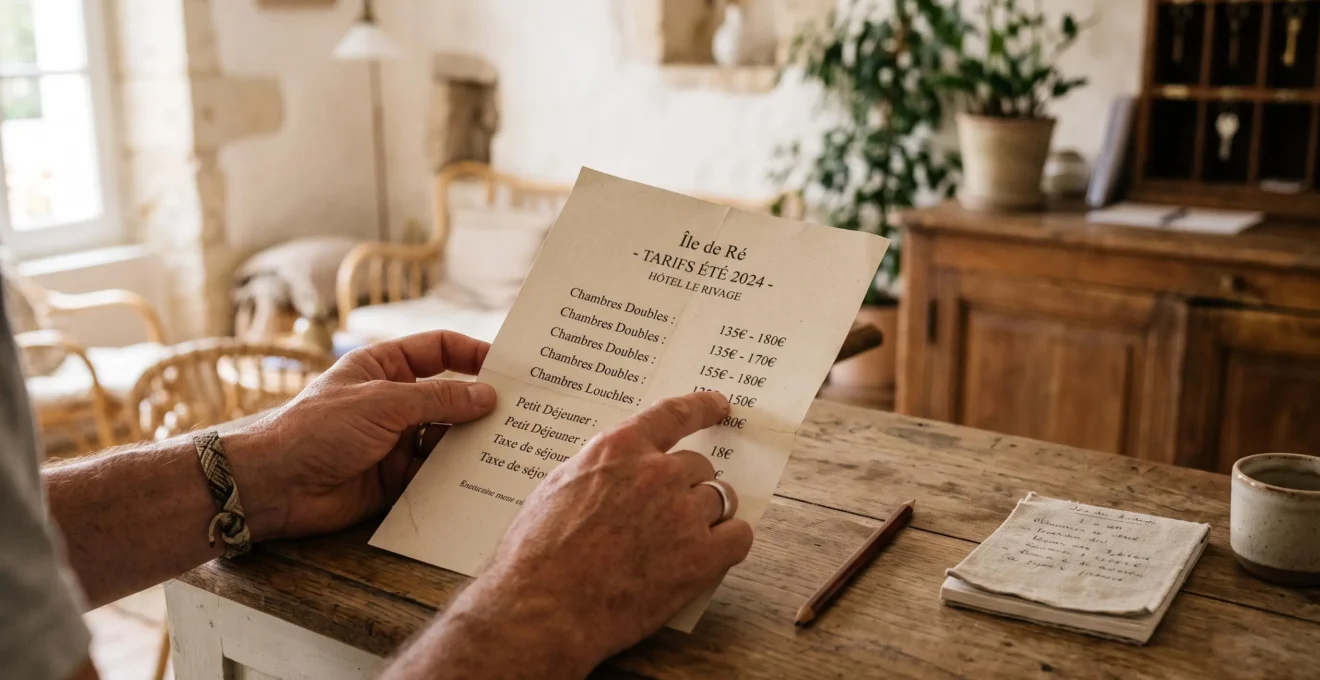
To avoid paying “more than expected”, compare total cost line by line. With a villa, the advertised price may not include every stay-related cost (for example cleaning, linens, or a deposit—terms vary by listing). With a hotel, check what is bundled in your rate versus optional add-ons (breakfast, parking), because two stays at the same nightly rate can end up with different totals.
A practical way to compare: Calculate the cost per person per night for a villa using your actual group size. Then compare it with the total cost of the hotel rooms your group would realistically need.
Industry indicators such as revenue per available room (RevPAR) can provide context on hotel performance, but they should not be used as a substitute for checking actual rates. For a meaningful comparison, review prices for your dates, location, room type, and cancellation conditions, then compare the total cost with that of a villa suited to the same group.
If your decision hinges on a premium villa, focus less on “cheap vs expensive” and more on whether the property truly matches your needs. That is where most disappointments (and wasted budget) happen on popular islands.
How to spot a truly prestigious luxury villa versus an overpriced rental
A “prestige” villa should feel coherent: finishes, maintenance, outdoor space, and location should match the promise of the photos. When something is overstated, you often see it in inconsistencies—wide-angle images hiding wear, vague location wording, or a mismatch between the number of guests claimed and the real living comfort.
Before you pay a premium, try to verify three things: condition (recent renovations and real upkeep), livability (kitchen, storage, bathrooms, outdoor shade/wind exposure), and actual proximity (to beaches, markets, and the village atmosphere you want). “5 minutes from…” can mean very different things on a bike versus on foot.
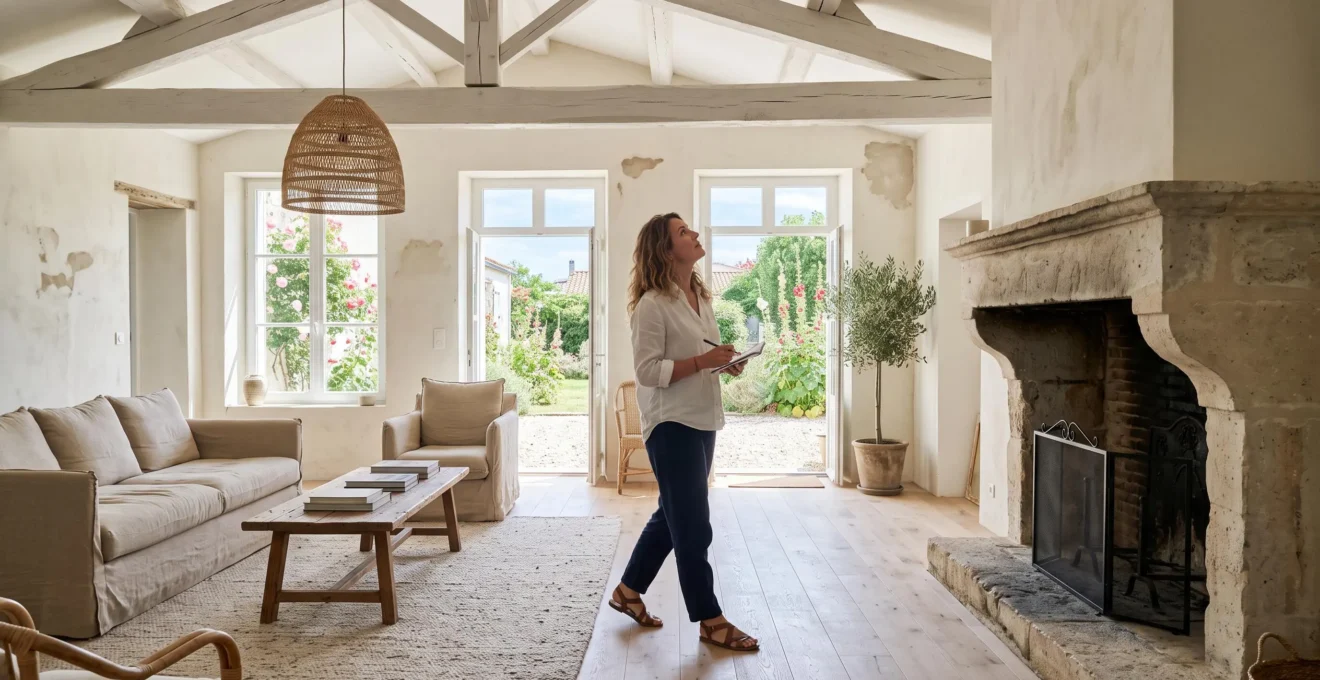
Services and equipment to check before you book
To decide whether a high-end rental is worth it, look for proof that comfort holds up for your group, not just that the home photographs well. Ask for clear, written confirmation of any must-haves that could affect daily life (especially for families and long stays).
- Sleeping comfort: bedding quality, room layout, and whether the “extra beds” are genuinely comfortable.
- Kitchen reality: enough fridge space, working oven/hobs, and tableware for the full capacity.
- Outdoor usability: secure space for children, shade, wind protection, and a practical dining area.
- Connectivity and work needs: if you plan remote work, confirm the setup rather than assuming.
- House rules and support: check-in process, on-site contact, and what happens if something breaks.
If you want a deeper method, you can also use this internal reference on prestige checks to structure your questions before committing.
Local rules for seasonal rentals
Seasonal rentals on the Île de Ré are subject to administrative requirements. The Communauté de Communes de l’Île de Ré provides an online service for the required declaration of furnished tourist accommodation. Its official portal also states that the national registration number system, initially scheduled for May 2026, has been postponed to the last quarter of 2026.
You can consult the official Île de Ré declaration portal for the current administrative information. This is a useful reference when discussing a rental with an owner or agency, but it should not be treated as a quality label or as proof that every aspect of the accommodation meets your expectations.
What this does and does not tell you: A declared rental can still fall short of your expectations. Check that the photos match the description, confirm essential details in writing, and read recent reviews before booking.
Which accommodation suits your traveller profile?
The quickest way to decide is to link each criterion to a concrete travel behaviour: cooking (or not), moving by bike (or car), travelling with children, and how much you value privacy versus services. The “right” option is the one that prevents the predictable pain points of your profile.

Families and groups: when a villa offers better overall value
A villa tends to make sense when you will actually use the space: shared breakfasts, children’s nap time, laundry, and evenings “at home” after the beach. The more bedrooms you fill, the more a whole-property price can become competitive per person, provided the house is genuinely comfortable at full capacity.
Decision rule you can apply: if your group wants to spend at least one main meal a day at home, values outdoor space, and plans a week rather than a quick break, a villa is often the most satisfying format—because it turns logistics (meals, kids’ routines) into a benefit rather than a constraint.
Couples and short stays: when a hotel makes more sense
For a weekend or a short mid-week break, a hotel often wins on simplicity: you arrive, drop bags, and you are out the door. You also avoid the “fixed costs” that can come with some villa rentals (time spent on inventory, cleaning rules, key collection), which matter more when you only stay two nights.
Decision rule: if you want to explore different villages, eat out most of the time, and keep your schedule flexible, a hotel is often the more convenient choice—even if a villa looks tempting in photos.
- You are 4+ travellers, staying 5–7 nights, and will use a kitchen :Start by comparing villas first; then benchmark hotels only if you need central access or daily services.
- You are two travellers, staying 1–3 nights, and plan to eat out :Start with hotels; consider a villa only if privacy/outdoor space is your top priority and the booking conditions are clear.
- You travel in high season and availability is tight :Choose the option that secures your dates with the least risk: clear cancellation terms, simple check-in, and a location that matches your mobility plan.
- You dislike managing practical details :Lean hotel, or a villa with clearly documented support (check-in, contact, included services) and confirmed basics in writing.
Booking the right way: key steps before confirming
On a sought-after island, the safest way to avoid disappointment is a simple process: decide early, verify what matters to your profile, and commit only when terms are clear. This is especially true for July–August, when pressure on accommodation is highest and choices narrow quickly.
- Lock your dates and group size firstYour “best option” changes drastically if you add two people or shorten the stay.
- Compare total cost, not only the headline rateFor villas, ask what is included (cleaning, linens, deposits) and get it in writing. For hotels, check what is included in the rate versus optional add-ons.
- Verify the location in a way that matches your mobilityIf you plan to bike everywhere, distances and road comfort matter more than a generic “near the beach” claim.
- Read terms before you payCancellation rules, check-in constraints, and any inventory/house rules should match your travel style.
- Use traceable payment methods and keep recordsKeep confirmation emails, receipts, and the written description of what you booked.
If you are booking a seasonal rental, the local administrative context can also help you frame the right questions. The Communauté de Communes de l’Île de Ré provides a formal declaration framework for “meublés de tourisme”, which is one more reason to favour listings or agencies able to answer clearly about legal and practical handling (without treating it as a guarantee of quality).
Is renting a private villa on the Île de Ré worth it compared with a hotel?
It is worth it if you will use what you pay for: space, privacy, outdoor living, and a kitchen—especially for families and groups staying close to a week. If you mainly want to sleep, eat out, and stay flexible (short break), a hotel often delivers better value through services and simplicity.
Villa or hotel for a family with children on the Île de Ré in high season?
A villa is often the more comfortable format for children in high season because it gives you routines (meals, naps) and outdoor space. The trade-off is organisation: you manage more details yourselves and should verify check-in, rules, and what is included. If you prioritise zero logistics and central access, a family-friendly hotel can still be the better fit.
Does a short trip for two justify a villa rather than a hotel?
Usually only if privacy and “having your own place” is the core goal of the trip. For 1–3 nights, hotels often win because you avoid time-consuming logistics (key collection, rules, end-of-stay constraints) and can change plans more easily.
What should I check before booking a villa on the Île de Ré?
Check consistency between photos and description, confirm must-have equipment in writing, understand what is included (cleaning/linens/deposit), verify the exact location for your mobility (bike vs car), and read cancellation and house rules before paying. If you are paying a premium, ask for proof that comfort holds at full capacity (bathrooms, dining space, sleeping arrangements).
If you are leaning towards a villa, the most effective next step is to use a structured method before you commit, especially in peak season when choices are limited. That is exactly what this villa booking guide is designed for.
At this point, you should be able to decide without guesswork: pick a private villa if your trip revolves around shared living space and autonomy; pick a hotel if you want services, shorter stays, and easier logistics. On the Île de Ré—where visitor concentration is highest from spring to late summer—your best move is to match the accommodation format to your season, your group size, and the way you actually travel.